

How to ensure the uniform spray of the pressure nozzle in a spray dryer?
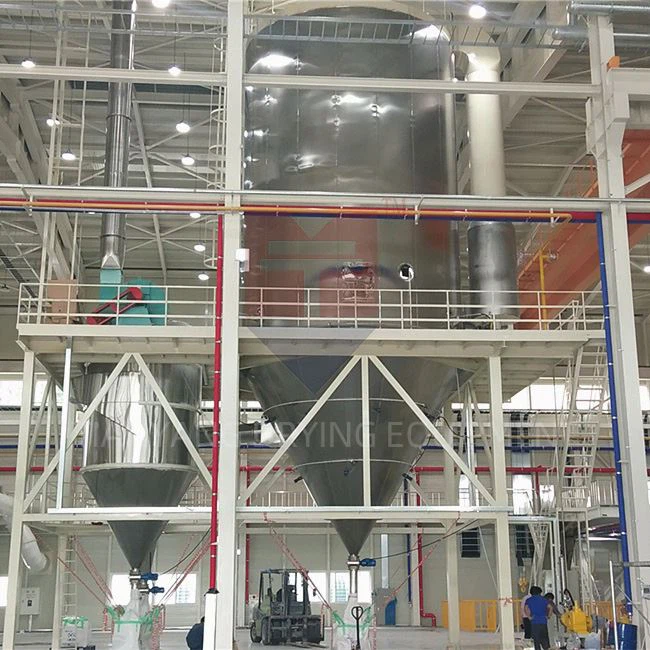
As a supplier of Pressure Nozzle Spray Dryers, ensuring the uniform spray of the pressure nozzle is crucial for the overall performance and quality of the drying process. A uniform spray pattern not only enhances the efficiency of the spray dryer but also guarantees consistent product quality. In this blog, I will share some key strategies and considerations to achieve a uniform spray from the pressure nozzle in a spray dryer.
Understanding the Basics of Pressure Nozzle Spray
Before delving into the methods to ensure uniform spray, it is essential to understand how a pressure nozzle works. A pressure nozzle atomizes a liquid into fine droplets by forcing it through a small orifice under high pressure. The size and distribution of these droplets play a vital role in the drying process. A non - uniform spray can lead to issues such as uneven drying, agglomeration of particles, and inconsistent product characteristics.
Selecting the Right Nozzle
The first step in ensuring a uniform spray is to select the appropriate pressure nozzle for your specific application. Different nozzles have different spray patterns, flow rates, and droplet size distributions. Some common types of pressure nozzles include full - cone nozzles, hollow - cone nozzles, and flat - fan nozzles.
- Full - cone nozzles: These nozzles produce a solid, circular spray pattern with a relatively uniform droplet size distribution. They are suitable for applications where a wide and even coverage is required. For example, in the production of powdered milk, a full - cone nozzle can ensure that the milk is evenly distributed in the drying chamber, resulting in consistent particle size and quality.
- Hollow - cone nozzles: Hollow - cone nozzles create a circular spray pattern with a hollow center. They are often used when a higher impact force is needed at the outer edges of the spray. This type of nozzle can be beneficial in applications where the liquid needs to be dispersed over a large area quickly.
- Flat - fan nozzles: Flat - fan nozzles produce a rectangular or oval - shaped spray pattern. They are ideal for applications where a linear or wide - area coverage is required, such as coating processes.
When selecting a nozzle, consider factors such as the viscosity of the liquid, the required flow rate, the desired droplet size, and the shape of the drying chamber. You can find more information about different types of pressure spray dryers on our website, including the Pressure Spray Drying Granulator Mixed Flow and the Cocurrent Flow Pressure Spray Granulation Dryer.
Maintaining Proper Pressure
Maintaining a consistent pressure is essential for achieving a uniform spray. Fluctuations in pressure can cause variations in droplet size and spray pattern. To ensure a stable pressure, use a high - quality pressure pump that can deliver a constant flow of liquid at the desired pressure.
- Pressure regulation: Install a pressure regulator in the system to control the pressure accurately. This device can adjust the pressure based on the flow rate and the requirements of the nozzle. For example, if the flow rate decreases, the pressure regulator can increase the pressure to maintain a consistent spray.
- Pressure monitoring: Regularly monitor the pressure using pressure gauges. This allows you to detect any sudden changes in pressure and take corrective actions promptly. If the pressure is too high or too low, it can lead to an uneven spray and affect the quality of the final product.
Controlling Liquid Properties
The properties of the liquid being sprayed also have a significant impact on the uniformity of the spray. Some key liquid properties to consider include viscosity, surface tension, and particle size.
- Viscosity: High - viscosity liquids are more difficult to atomize and can result in larger droplet sizes and an uneven spray pattern. To reduce viscosity, you can heat the liquid or add a thinning agent. For example, in the production of certain polymers, heating the polymer solution can make it easier to spray and ensure a more uniform distribution.
- Surface tension: Surface tension affects the formation and stability of droplets. Liquids with high surface tension tend to form larger droplets. You can reduce surface tension by adding surfactants or using a different formulation. This can help in achieving a finer and more uniform spray.
- Particle size: If the liquid contains particles, the size and distribution of these particles can also affect the spray pattern. Ensure that the particles are properly dispersed and that their size is within the acceptable range for the nozzle. Agglomerated particles can clog the nozzle and cause uneven spray.
Nozzle Maintenance
Regular maintenance of the pressure nozzle is crucial for ensuring a uniform spray. Over time, nozzles can become clogged with debris, wear out, or develop deposits.

- Cleaning: Clean the nozzle regularly to remove any build - up of solids or contaminants. Use a suitable cleaning solution and follow the manufacturer's instructions. For example, if the nozzle is used to spray a sticky liquid, you may need to use a more aggressive cleaning agent to remove the residue.
- Inspection: Inspect the nozzle for any signs of wear or damage, such as erosion or deformation. Replace the nozzle if it is damaged, as a worn - out nozzle can lead to an uneven spray and reduced performance.
- Calibration: Periodically calibrate the nozzle to ensure that it is operating at the optimal settings. This may involve checking the flow rate, pressure, and spray pattern.
Environmental Factors
The environment in which the spray dryer operates can also affect the uniformity of the spray. Factors such as temperature, humidity, and air flow can influence the evaporation rate and the behavior of the droplets.
- Temperature and humidity: High temperatures and low humidity can cause the droplets to evaporate more quickly, which may affect the drying process and the final product quality. On the other hand, low temperatures and high humidity can slow down evaporation and lead to wet spots or uneven drying. Control the temperature and humidity in the drying chamber to ensure a consistent drying environment.
- Air flow: The air flow in the drying chamber should be uniform and well - distributed. Uneven air flow can cause the droplets to drift or accumulate in certain areas, resulting in an uneven spray pattern. Design the drying chamber and the air distribution system carefully to ensure proper air circulation.
Conclusion
Ensuring the uniform spray of the pressure nozzle in a spray dryer is a multi - faceted process that requires careful consideration of various factors. By selecting the right nozzle, maintaining proper pressure, controlling liquid properties, performing regular maintenance, and accounting for environmental factors, you can achieve a more uniform spray and improve the overall performance and quality of your spray drying process.
If you are interested in learning more about our Pressure Nozzle Spray Dryers or have any questions regarding the uniform spray of pressure nozzles, we encourage you to contact us for a detailed discussion. Our team of experts is ready to assist you in finding the best solutions for your specific needs.
References
- Perry, R. H., & Green, D. W. (1997). Perry's Chemical Engineers' Handbook. McGraw - Hill.
- Masters, K. (1991). Spray Drying Handbook. Longman Scientific & Technical.