

What is the heat transfer mechanism in a Pressure Spray Dryer?
As a supplier of Pressure Spray Dryers, I've witnessed firsthand the transformative impact these machines have on various industries, from food and pharmaceuticals to chemicals and ceramics. One of the most frequently asked questions about these dryers is about the heat transfer mechanism. In this blog post, I'll delve into the details of how heat transfer occurs in a Pressure Spray Dryer, shedding light on this crucial aspect of the drying process.
Understanding the Basics of Pressure Spray Dryers
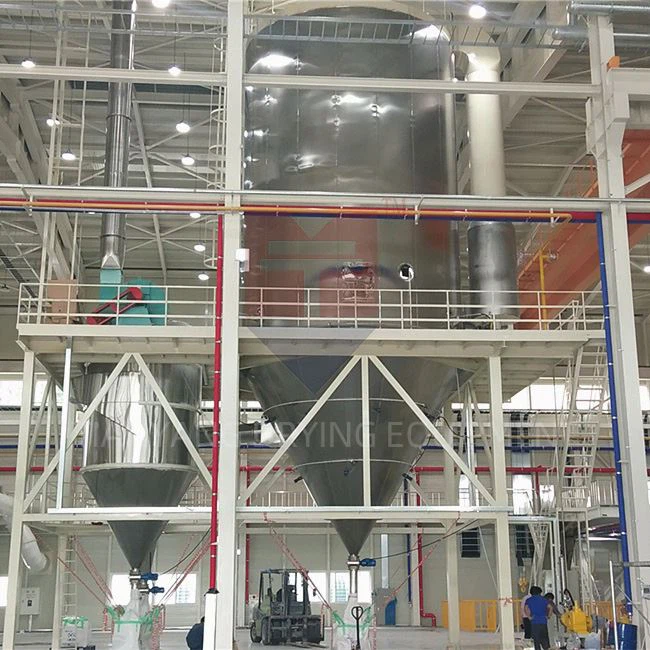
Before we dive into the heat transfer mechanism, let's briefly review what a Pressure Spray Dryer is. A Pressure Spray Dryer is a type of industrial dryer used to convert liquid feed into a dry powder. The liquid feed, which can be a solution, suspension, or emulsion, is pumped through a high - pressure nozzle. The nozzle atomizes the liquid into fine droplets, which are then introduced into a drying chamber. Hot air is also introduced into the chamber, and as the droplets come into contact with the hot air, they lose moisture and transform into dry particles.
The Three Modes of Heat Transfer
Heat transfer in a Pressure Spray Dryer occurs through three main modes: conduction, convection, and radiation. Each mode plays a unique role in the drying process, and understanding them is essential for optimizing the performance of the dryer.

Conduction
Conduction is the transfer of heat through a material without the movement of the material itself. In a Pressure Spray Dryer, conduction occurs at the surface of the droplets. When the hot air comes into contact with the droplets, heat is transferred from the air to the outer layer of the droplet. This heat causes the moisture in the outer layer to evaporate, creating a temperature gradient within the droplet. The heat then conducts from the outer layer to the inner layers of the droplet, facilitating further evaporation.
The rate of conduction depends on several factors, including the thermal conductivity of the liquid, the thickness of the droplet, and the temperature difference between the hot air and the droplet. For example, liquids with high thermal conductivity will transfer heat more quickly than those with low thermal conductivity. Similarly, smaller droplets will have a shorter conduction path, allowing for faster heat transfer.
Convection
Convection is the transfer of heat by the movement of a fluid, such as air or liquid. In a Pressure Spray Dryer, convection is the dominant mode of heat transfer. The hot air is circulated through the drying chamber, carrying heat to the droplets. As the hot air comes into contact with the droplets, it transfers heat to them and picks up moisture. The moist air is then removed from the chamber, and fresh hot air is introduced to continue the drying process.
There are two types of convection in a Pressure Spray Dryer: forced convection and natural convection. Forced convection is created by the use of fans or blowers to circulate the hot air through the chamber. This ensures a uniform distribution of heat and a high rate of heat transfer. Natural convection, on the other hand, occurs due to the density differences between the hot air and the cooler air in the chamber. While natural convection can contribute to heat transfer, it is usually less efficient than forced convection and is often supplemented by forced convection in industrial dryers.
The efficiency of convection heat transfer depends on the velocity of the hot air, the temperature of the hot air, and the surface area of the droplets. Higher air velocities increase the rate of heat transfer by reducing the boundary layer thickness around the droplets. Similarly, higher air temperatures provide a greater driving force for heat transfer. The large surface area of the atomized droplets also enhances convection heat transfer, as it allows for more contact between the droplets and the hot air.
Radiation
Radiation is the transfer of heat through electromagnetic waves. In a Pressure Spray Dryer, radiation heat transfer occurs when the hot surfaces of the dryer, such as the walls of the drying chamber or the heating elements, emit infrared radiation. This radiation is absorbed by the droplets, causing them to heat up and the moisture to evaporate.
Although radiation is a relatively minor mode of heat transfer compared to convection in a Pressure Spray Dryer, it can still have a significant impact on the drying process, especially in high - temperature drying applications. The amount of radiation heat transfer depends on the temperature of the radiating surface, the emissivity of the surface, and the distance between the radiating surface and the droplets.
Flow Patterns and Heat Transfer
The flow pattern of the hot air and the droplets in the drying chamber also affects the heat transfer mechanism. There are two common flow patterns in Pressure Spray Dryers: mixed flow and cocurrent flow.
Mixed Flow
In a Pressure Spray Drying Granulator Mixed Flow, the hot air and the droplets move in different directions within the drying chamber. This creates a complex flow pattern that enhances the contact between the hot air and the droplets, resulting in efficient heat transfer. The mixed flow pattern also allows for a longer residence time of the droplets in the chamber, which can improve the drying efficiency.
Cocurrent Flow
In a Cocurrent Flow Pressure Spray Granulation Dryer, the hot air and the droplets move in the same direction. This flow pattern is characterized by a high initial drying rate, as the hot air comes into direct contact with the freshly atomized droplets. The cocurrent flow also reduces the risk of over - drying the particles, as the temperature of the air decreases as it moves through the chamber.
Optimizing Heat Transfer in a Pressure Spray Dryer
To optimize the heat transfer in a Pressure Spray Dryer, several factors need to be considered. These include the design of the dryer, the operating conditions, and the properties of the liquid feed.
Dryer Design
The design of the dryer plays a crucial role in heat transfer. The shape and size of the drying chamber, the type of nozzle, and the arrangement of the air distribution system all affect the flow pattern and the contact between the hot air and the droplets. For example, a well - designed air distribution system can ensure a uniform distribution of hot air throughout the chamber, maximizing the heat transfer efficiency.
Operating Conditions
The operating conditions, such as the temperature and flow rate of the hot air, the pressure of the liquid feed, and the feed rate, also have a significant impact on heat transfer. By adjusting these parameters, it is possible to optimize the drying process and achieve the desired product quality. For example, increasing the temperature of the hot air can increase the rate of heat transfer, but it may also cause thermal degradation of the product. Therefore, finding the right balance is essential.
Liquid Feed Properties
The properties of the liquid feed, such as its viscosity, surface tension, and solids content, can affect the atomization process and the heat transfer characteristics. For example, high - viscosity liquids may require a higher pressure to atomize, and they may also have a slower evaporation rate due to their lower surface area. Understanding the properties of the liquid feed and adjusting the dryer parameters accordingly can improve the heat transfer efficiency.
Conclusion
In conclusion, the heat transfer mechanism in a Pressure Spray Dryer is a complex process that involves conduction, convection, and radiation. Each mode of heat transfer plays a vital role in the drying process, and optimizing them is crucial for achieving efficient and high - quality drying. By understanding the factors that affect heat transfer, such as the design of the dryer, the operating conditions, and the properties of the liquid feed, it is possible to enhance the performance of the dryer and meet the specific requirements of different applications.
If you are interested in learning more about our Pressure Spray Dryers or have any questions about the heat transfer mechanism, please feel free to contact us. Our team of experts is ready to assist you in selecting the right dryer for your needs and optimizing its performance. We look forward to the opportunity to work with you and help you achieve your drying goals.
References
- Masters, K. (1991). Spray Drying Handbook. Longman Scientific & Technical.
- Mujumdar, A. S. (2007). Handbook of Industrial Drying. CRC Press.
- Perry, R. H., & Green, D. W. (1997). Perry's Chemical Engineers' Handbook. McGraw - Hill.